Powerful JSON Handling in Modern C++
nlohmannjson makes working with JSON simple, intuitive, and efficient. Easily parse, create, and manipulate JSON data using clean and expressive modern C++ syntax. As a lightweight, header-only library, it integrates seamlessly into any project without complex setup. Whether you're building APIs, handling configuration files, or managing data exchange, nlohmannjson delivers performance, reliability, and ease of use.

SERVICES
All-in-One JSON Solutions for Modern C++ Development
Software Development
Build robust C++ applications with seamless JSON integration using nlohmannjson. Create scalable, efficient, and modern solutions tailored to your needs.
JSON Parsing & Integration
Easily parse, serialize, and integrate JSON data into your applications with clean and readable C++ code using nlohmannjson.
System & Application Development
Develop high-performance systems and applications that rely on structured JSON data for configuration, APIs, and real-time processing.
API & Data Handling Solutions
Design and manage APIs with smooth JSON data exchange. Ensure fast, reliable, and secure communication between systems.
WHY US
Trusted JSON Solutions for Modern C++ Development
With years of experience in modern C++ development, we specialize in delivering efficient and reliable JSON handling solutions using nlohmannjson. Our approach focuses on simplicity, performance, and clean code — helping developers build scalable applications with ease. Whether you're working on APIs, configuration systems, or data processing, we provide solutions you can trust.
Our team focuses on modern C++ and JSON-based systems, ensuring clean implementation and high performance in every project.
Work with professionals who understand best practices in C++, data structures, and JSON integration for real-world applications.
Get continuous support for integration, debugging, and optimization whenever you need it.
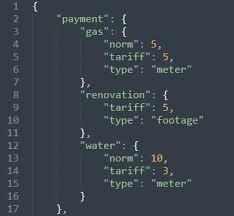
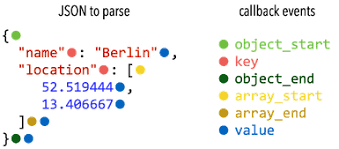
The json class provides an API for manipulating a JSON value. To create a json object by reading a JSON file:
#include <fstream>
#include <nlohmann/json.hpp>
using json = nlohmann::json;

// ...

std::ifstream f("example.json");
json data = json::parse(f);
If using modules (enabled with NLOHMANN_JSON_BUILD_MODULES), this example becomes:
import std;
import nlohmann.json;

using json = nlohmann::json;

// ...

std::ifstream f("example.json");
json data = json::parse(f);Assume you want to hard-code this literal JSON value as a json object:
{
  "pi": 3.141,
  "happy": true
}
There are various options:
// Using (raw) string literals and json::parse
json ex1 = json::parse(R"(
  {
    "pi": 3.141,
    "happy": true
  }
)");

// Using user-defined (raw) string literals
using namespace nlohmann::literals;
json ex2 = R"(
  {
    "pi": 3.141,
    "happy": true
  }
)"_json;

// Using initializer lists
json ex3 = {
  {"happy", true},
  {"pi", 3.141},
};Here are some examples to give you an idea how to use the class.
Assume you want to create the JSON object
{
  "pi": 3.141,
  "happy": true,
  "name": "Niels",
  "nothing": null,
  "answer": {
    "everything": 42
  },
  "list": [1, 0, 2],
  "object": {
    "currency": "USD",
    "value": 42.99
  }
}
With this library, you could write:
// create an empty structure (null)
json j;

// add a number stored as double (note the implicit conversion of j to an object)
j["pi"] = 3.141;

// add a Boolean stored as bool
j["happy"] = true;

// add a string stored as std::string
j["name"] = "Niels";

// add another null object by passing nullptr
j["nothing"] = nullptr;

// add an object inside the object
j["answer"]["everything"] = 42;

// add an array stored as std::vector (using an initializer list)
j["list"] = { 1, 0, 2 };

// add another object (using an initializer list of pairs)
j["object"] = { {"currency", "USD"}, {"value", 42.99} };

// instead, you could also write (which looks very similar to the JSON above)
json j2 = {
  {"pi", 3.141},
  {"happy", true},
  {"name", "Niels"},
  {"nothing", nullptr},
  {"answer", {
    {"everything", 42}
  }},
  {"list", {1, 0, 2}},
  {"object", {
    {"currency", "USD"},
    {"value", 42.99}
  }}
};
Note that in all these cases, you never need to “tell” the compiler which JSON value type you want to use. If you want to be explicit or express some edge cases, the functions json::array() and json::object() will help:
// a way to express the empty array []
json empty_array_explicit = json::array();

// ways to express the empty object {}
json empty_object_implicit = json({});
json empty_object_explicit = json::object();

// a way to express an _array_ of key/value pairs [["currency", "USD"], ["value", 42.99]]
json array_not_object = json::array({ {"currency", "USD"}, {"value", 42.99} });You can create a JSON value (deserialization) by appending _json to a string literal:
// create object from string literal
json j = "{ \"happy\": true, \"pi\": 3.141 }"_json;

// or even nicer with a raw string literal
auto j2 = R"(
  {
    "happy": true,
    "pi": 3.141
  }
)"_json;
Note that without appending the _json suffix, the passed string literal is not parsed, but just used as JSON string value. That is, json j = "{ \"happy\": true, \"pi\": 3.141 }" would just store the string "{ "happy": true, "pi": 3.141 }" rather than parsing the actual object.
The string literal should be brought into scope with using namespace nlohmann::literals; (see json::parse()).
The above example can also be expressed explicitly using json::parse():
// parse explicitly
auto j3 = json::parse(R"({"happy": true, "pi": 3.141})");
You can also get a string representation of a JSON value (serialize):
// explicit conversion to string
std::string s = j.dump();    // {"happy":true,"pi":3.141}

// serialization with pretty printing
// pass in the amount of spaces to indent
std::cout << j.dump(4) << std::endl;
// {
//     "happy": true,
//     "pi": 3.141
// }
Note the difference between serialization and assignment:
// store a string in a JSON value
json j_string = "this is a string";

// retrieve the string value
auto cpp_string = j_string.get<std::string>();
// retrieve the string value (alternative when a variable already exists)
std::string cpp_string2;
j_string.get_to(cpp_string2);

// retrieve the serialized value (explicit JSON serialization)
std::string serialized_string = j_string.dump();

// output of original string
std::cout << cpp_string << " == " << cpp_string2 << " == " << j_string.get<std::string>() << '\n';
// output of serialized value
std::cout << j_string << " == " << serialized_string << std::endl;
.dump() returns the originally stored string value.
Note the library only supports UTF-8. When you store strings with different encodings in the library, calling dump() may throw an exception unless json::error_handler_t::replace or json::error_handler_t::ignore are used as error handlers.
You can also use streams to serialize and deserialize:
// deserialize from standard input
json j;
std::cin >> j;

// serialize to standard output
std::cout << j;

// the setw manipulator was overloaded to set the indentation for pretty printing
std::cout << std::setw(4) << j << std::endl;
These operators work for any subclasses of std::istream or std::ostream. Here is the same example with files:
// read a JSON file
std::ifstream i("file.json");
json j;
i >> j;

// write prettified JSON to another file
std::ofstream o("pretty.json");
o << std::setw(4) << j << std::endl;
Please note that setting the exception bit for failbit is inappropriate for this use case. It will result in program termination due to the noexcept specifier in use.
You can also parse JSON from an iterator range; that is, from any container accessible by iterators whose value_type is an integral type of 1, 2, or 4 bytes, which will be interpreted as UTF-8, UTF-16, and UTF-32 respectively. For instance, a std::vector<std::uint8_t>, or a std::list<std::uint16_t>:
std::vector<std::uint8_t> v = {'t', 'r', 'u', 'e'};
json j = json::parse(v.begin(), v.end());
You may leave the iterators for the range [begin, end):
std::vector<std::uint8_t> v = {'t', 'r', 'u', 'e'};
json j = json::parse(v);Since the parse function accepts arbitrary iterator ranges, you can provide your own data sources by implementing the LegacyInputIterator concept.
struct MyContainer {
  void advance();
  const char& get_current();
};

struct MyIterator {
    using difference_type = std::ptrdiff_t;
    using value_type = char;
    using pointer = const char*;
    using reference = const char&;
    using iterator_category = std::input_iterator_tag;

    MyIterator& operator++() {
        target->advance();
        return *this;
    }

    bool operator!=(const MyIterator& rhs) const {
        return rhs.target != target;
    }

    reference operator*() const {
        return target->get_current();
    }

    MyContainer* target = nullptr;
};

MyIterator begin(MyContainer& tgt) {
    return MyIterator{&tgt};
}

MyIterator end(const MyContainer&) {
    return {};
}

void foo() {
    MyContainer c;
    json j = json::parse(c);
}The library uses a SAX-like interface with the following functions:
// called when null is parsed
bool null();

// called when a boolean is parsed; value is passed
bool boolean(bool val);

// called when a signed or unsigned integer number is parsed; value is passed
bool number_integer(number_integer_t val);
bool number_unsigned(number_unsigned_t val);

// called when a floating-point number is parsed; value and original string is passed
bool number_float(number_float_t val, const string_t& s);

// called when a string is parsed; value is passed and can be safely moved away
bool string(string_t& val);
// called when a binary value is parsed; value is passed and can be safely moved away
bool binary(binary_t& val);

// called when an object or array begins or ends, resp. The number of elements is passed (or -1 if not known)
bool start_object(std::size_t elements);
bool end_object();
bool start_array(std::size_t elements);
bool end_array();
// called when an object key is parsed; value is passed and can be safely moved away
bool key(string_t& val);

// called when a parse error occurs; byte position, the last token, and an exception is passed
bool parse_error(std::size_t position, const std::string& last_token, const detail::exception& ex);
The return value of each function determines whether parsing should proceed.
To implement your own SAX handler, proceed as follows:
- Implement the SAX interface in a class. You can use class
nlohmann::json_sax<json>as base class, but you can also use any class where the functions described above are implemented and public. - Create an object of your SAX interface class, e.g.
my_sax. - Call
bool json::sax_parse(input, &my_sax); where the first parameter can be any input like a string or an input stream and the second parameter is a pointer to your SAX interface.
Note the sax_parse function only returns a bool indicating the result of the last executed SAX event. It does not return a json value – it is up to you to decide what to do with the SAX events. Furthermore, no exceptions are thrown in case of a parse error — it is up to you what to do with the exception object passed to your parse_error implementation. Internally, the SAX interface is used for the DOM parser (class json_sax_dom_parser) as well as the acceptor (json_sax_acceptor), see file json_sax.hpp.
We designed the JSON class to behave just like an STL container. In fact, it satisfies the ReversibleContainer requirement.
// create an array using push_back
json j;
j.push_back("foo");
j.push_back(1);
j.push_back(true);

// also use emplace_back
j.emplace_back(1.78);

// iterate the array
for (json::iterator it = j.begin(); it != j.end(); ++it) {
  std::cout << *it << '\n';
}

// range-based for
for (auto& element : j) {
  std::cout << element << '\n';
}

// getter/setter
const auto tmp = j[0].get<std::string>();
j[1] = 42;
bool foo = j.at(2);

// comparison
j == R"(["foo", 1, true, 1.78])"_json;  // true

// other stuff
j.size();     // 4 entries
j.empty();    // false
j.type();     // json::value_t::array
j.clear();    // the array is empty again

// convenience type checkers
j.is_null();
j.is_boolean();
j.is_number();
j.is_object();
j.is_array();
j.is_string();

// create an object
json o;
o["foo"] = 23;
o["bar"] = false;
o["baz"] = 3.141;

// also use emplace
o.emplace("weather", "sunny");

// special iterator member functions for objects
for (json::iterator it = o.begin(); it != o.end(); ++it) {
  std::cout << it.key() << " : " << it.value() << "\n";
}

// the same code as range for
for (auto& el : o.items()) {
  std::cout << el.key() << " : " << el.value() << "\n";
}

// even easier with structured bindings (C++17)
for (auto& [key, value] : o.items()) {
  std::cout << key << " : " << value << "\n";
}

// find an entry
if (o.contains("foo")) {
  // there is an entry with key "foo"
}

// or via find and an iterator
if (o.find("foo") != o.end()) {
  // there is an entry with key "foo"
}

// or simpler using count()
int foo_present = o.count("foo"); // 1
int fob_present = o.count("fob"); // 0

// delete an entry
o.erase("foo");Any sequence container (std::array, std::vector, std::deque, std::forward_list, std::list) whose values can be used to construct JSON values (e.g., integers, floating point numbers, Booleans, string types, or again STL containers described in this section) can be used to create a JSON array. The same holds for similar associative containers (std::set, std::multiset, std::unordered_set, std::unordered_multiset), but in these cases the order of the elements of the array depends on how the elements are ordered in the respective STL container.
std::vector<int> c_vector {1, 2, 3, 4};
json j_vec(c_vector);
// [1, 2, 3, 4]

std::deque<double> c_deque {1.2, 2.3, 3.4, 5.6};
json j_deque(c_deque);
// [1.2, 2.3, 3.4, 5.6]

std::list<bool> c_list {true, true, false, true};
json j_list(c_list);
// [true, true, false, true]

std::forward_list<int64_t> c_flist {12345678909876, 23456789098765, 34567890987654, 45678909876543};
json j_flist(c_flist);
// [12345678909876, 23456789098765, 34567890987654, 45678909876543]

std::array<unsigned long, 4> c_array {{1, 2, 3, 4}};
json j_array(c_array);
// [1, 2, 3, 4]

std::set<std::string> c_set {"one", "two", "three", "four", "one"};
json j_set(c_set); // only one entry for "one" is used
// ["four", "one", "three", "two"]

std::unordered_set<std::string> c_uset {"one", "two", "three", "four", "one"};
json j_uset(c_uset); // only one entry for "one" is used
// maybe ["two", "three", "four", "one"]

std::multiset<std::string> c_mset {"one", "two", "one", "four"};
json j_mset(c_mset); // both entries for "one" are used
// maybe ["one", "two", "one", "four"]

std::unordered_multiset<std::string> c_umset {"one", "two", "one", "four"};
json j_umset(c_umset); // both entries for "one" are used
// maybe ["one", "two", "one", "four"]
Likewise, any associative key-value containers (std::map, std::multimap, std::unordered_map, std::unordered_multimap) whose keys can construct an std::string and whose values can be used to construct JSON values (see examples above) can be used to create a JSON object. Note that in case of multimaps, only one key is used in the JSON object and the value depends on the internal order of the STL container.
std::map<std::string, int> c_map { {"one", 1}, {"two", 2}, {"three", 3} };
json j_map(c_map);
// {"one": 1, "three": 3, "two": 2 }

std::unordered_map<const char*, double> c_umap { {"one", 1.2}, {"two", 2.3}, {"three", 3.4} };
json j_umap(c_umap);
// {"one": 1.2, "two": 2.3, "three": 3.4}

std::multimap<std::string, bool> c_mmap { {"one", true}, {"two", true}, {"three", false}, {"three", true} };
json j_mmap(c_mmap); // only one entry for key "three" is used
// maybe {"one": true, "two": true, "three": true}

std::unordered_multimap<std::string, bool> c_ummap { {"one", true}, {"two", true}, {"three", false}, {"three", true} };
json j_ummap(c_ummap); // only one entry for key "three" is used
// maybe {"one": true, "two": true, "three": true}The library supports JSON Pointer (RFC 6901) as an alternative means to address structured values. On top of this, JSON Patch (RFC 6902) allows describing differences between two JSON values — effectively allowing patch and diff operations known from Unix.
// a JSON value
json j_original = R"({
  "baz": ["one", "two", "three"],
  "foo": "bar"
})"_json;

// access members with a JSON pointer (RFC 6901)
j_original["/baz/1"_json_pointer];
// "two"

// a JSON patch (RFC 6902)
json j_patch = R"([
  { "op": "replace", "path": "/baz", "value": "boo" },
  { "op": "add", "path": "/hello", "value": ["world"] },
  { "op": "remove", "path": "/foo"}
])"_json;

// apply the patch
json j_result = j_original.patch(j_patch);
// {
//    "baz": "boo",
//    "hello": ["world"]
// }

// calculate a JSON patch from two JSON values
json::diff(j_result, j_original);
// [
//   { "op":" replace", "path": "/baz", "value": ["one", "two", "three"] },
//   { "op": "remove","path": "/hello" },
//   { "op": "add", "path": "/foo", "value": "bar" }
// ]The library supports JSON Merge Patch (RFC 7386) as a patch format. Instead of using JSON Pointer (see above) to specify values to be manipulated, it describes the changes using a syntax that closely mimics the document being modified.
// a JSON value
json j_document = R"({
  "a": "b",
  "c": {
    "d": "e",
    "f": "g"
  }
})"_json;

// a patch
json j_patch = R"({
  "a":"z",
  "c": {
    "f": null
  }
})"_json;

// apply the patch
j_document.merge_patch(j_patch);
// {
//  "a": "z",
//  "c": {
//    "d": "e"
//  }
// }Supported types can be implicitly converted to JSON values.
It is recommended to NOT USE implicit conversions FROM a JSON value. You can find more details about this recommendation here. You can switch off implicit conversions by defining JSON_USE_IMPLICIT_CONVERSIONS to 0 before including the json.hpp header. When using CMake, you can also achieve this by setting the option JSON_ImplicitConversions to OFF.
// strings
std::string s1 = "Hello, world!";
json js = s1;
auto s2 = js.get<std::string>();
// NOT RECOMMENDED
std::string s3 = js;
std::string s4;
s4 = js;

// Booleans
bool b1 = true;
json jb = b1;
auto b2 = jb.get<bool>();
// NOT RECOMMENDED
bool b3 = jb;
bool b4;
b4 = jb;

// numbers
int i = 42;
json jn = i;
auto f = jn.get<double>();
// NOT RECOMMENDED
double f2 = jb;
double f3;
f3 = jb;

// etc.
Note that char types are not automatically converted to JSON strings, but to integer numbers. A conversion to a string must be specified explicitly:
char ch = 'A';                       // ASCII value 65
json j_default = ch;                 // stores integer number 65
json j_string = std::string(1, ch); // stores string "A"Every type can be serialized in JSON, not just STL containers and scalar types. Usually, you would do something along those lines:
namespace ns {
    // a simple struct to model a person
    struct person {
        std::string name;
        std::string address;
        int age;
    };
}

ns::person p = {"Ned Flanders", "744 Evergreen Terrace", 60};

// convert to JSON: copy each value into the JSON object
json j;
j["name"] = p.name;
j["address"] = p.address;
j["age"] = p.age;

// ...

// convert from JSON: copy each value from the JSON object
ns::person p {
    j["name"].get<std::string>(),
    j["address"].get<std::string>(),
    j["age"].get<int>()
};
It works, but that’s quite a lot of boilerplate… Fortunately, there’s a better way:
// create a person
ns::person p {"Ned Flanders", "744 Evergreen Terrace", 60};

// conversion: person -> json
json j = p;

std::cout << j << std::endl;
// {"address":"744 Evergreen Terrace","age":60,"name":"Ned Flanders"}

// conversion: json -> person
auto p2 = j.get<ns::person>();

// that's it
assert(p == p2);To make this work with one of your types, you only need to provide two functions:
using json = nlohmann::json;

namespace ns {
    void to_json(json& j, const person& p) {
        j = json{{"name", p.name}, {"address", p.address}, {"age", p.age}};
    }

    void from_json(const json& j, person& p) {
        j.at("name").get_to(p.name);
        j.at("address").get_to(p.address);
        j.at("age").get_to(p.age);
    }
} // namespace ns
That’s all! When calling the json constructor with your type, your custom to_json method will be automatically called. Likewise, when calling get<your_type>() or get_to(your_type&), the from_json method will be called.
Some important things:
- Those methods MUST be in your type’s namespace (which can be the global namespace), or the library will not be able to locate them (in this example, they are in namespace
ns, wherepersonis defined). - Those methods MUST be available (e.g., proper headers must be included) everywhere you use these conversions. Look at issue 1108 for errors that may occur otherwise.
- When using
get<your_type>(),your_typeMUST be DefaultConstructible. (There is a way to bypass this requirement described later.) - In function
from_json, use functionat()to access the object values rather thanoperator[]. In case a key does not exist,atthrows an exception that you can handle, whereasoperator[]exhibits undefined behavior. - You do not need to add serializers or deserializers for STL types like
std::vector: the library already implements these.
If you just want to serialize/deserialize some structs, the to_json/from_json functions can be a lot of boilerplate. There are several macros to make your life easier as long as you (1) want to use a JSON object as serialization and (2) want to use the member variable names as object keys in that object.
Which macro to choose depends on whether private member variables need to be accessed, a deserialization is needed, missing values should yield an error or should be replaced by default values, and if derived classes are used. See this overview to choose the right one for your use case.
The to_json/from_json functions for the person struct above can be created with NLOHMANN_DEFINE_TYPE_NON_INTRUSIVE. In all macros, the first parameter is the name of the class/struct, and all remaining parameters name the members.
namespace ns {
    NLOHMANN_DEFINE_TYPE_NON_INTRUSIVE(person, name, address, age)
}
Here is another example with private members, where NLOHMANN_DEFINE_TYPE_INTRUSIVE is needed:
namespace ns {
    class address {
      private:
        std::string street;
        int housenumber;
        int postcode;

      public:
        NLOHMANN_DEFINE_TYPE_INTRUSIVE(address, street, housenumber, postcode)
    };
}This requires a bit more advanced technique. But first, let’s see how this conversion mechanism works:
The library uses JSON Serializers to convert types to JSON. The default serializer for nlohmann::json is nlohmann::adl_serializer (ADL means Argument-Dependent Lookup).
It is implemented like this (simplified):
template <typename T>
struct adl_serializer {
    static void to_json(json& j, const T& value) {
        // calls the "to_json" method in T's namespace
    }

    static void from_json(const json& j, T& value) {
        // same thing, but with the "from_json" method
    }
};
This serializer works fine when you have control over the type’s namespace. However, what about boost::optional or std::filesystem::path (C++17)? Hijacking the boost namespace is pretty bad, and it’s illegal to add something other than template specializations to std…
To solve this, you need to add a specialization of adl_serializer to the nlohmann namespace, here’s an example:
// partial specialization (full specialization works too)
namespace nlohmann {
    template <typename T>
    struct adl_serializer<boost::optional<T>> {
        static void to_json(json& j, const boost::optional<T>& opt) {
            if (opt == boost::none) {
                j = nullptr;
            } else {
              j = *opt; // this will call adl_serializer<T>::to_json which will
                        // find the free function to_json in T's namespace!
            }
        }

        static void from_json(const json& j, boost::optional<T>& opt) {
            if (j.is_null()) {
                opt = boost::none;
            } else {
                opt = j.get<T>(); // same as above, but with
                                  // adl_serializer<T>::from_json
            }
        }
    };
}There is a way if your type is MoveConstructible. You will need to specialize the adl_serializer as well, but with a special from_json overload:
struct move_only_type {
    move_only_type() = delete;
    move_only_type(int ii): i(ii) {}
    move_only_type(const move_only_type&) = delete;
    move_only_type(move_only_type&&) = default;

    int i;
};

namespace nlohmann {
    template <>
    struct adl_serializer<move_only_type> {
        // note: the return type is no longer 'void', and the method only takes
        // one argument
        static move_only_type from_json(const json& j) {
            return {j.get<int>()};
        }

        // Here's the catch! You must provide a to_json method! Otherwise, you
        // will not be able to convert move_only_type to json, since you fully
        // specialized adl_serializer on that type
        static void to_json(json& j, move_only_type t) {
            j = t.i;
        }
    };
}Yes. You might want to take a look at unit-udt.cpp in the test suite, to see a few examples.
If you write your own serializer, you’ll need to do a few things:
- use a different
basic_jsonalias thannlohmann::json(the last template parameter ofbasic_jsonis theJSONSerializer) - use your
basic_jsonalias (or a template parameter) in all yourto_json/from_jsonmethods - use
nlohmann::to_jsonandnlohmann::from_jsonwhen you need ADL
Here is an example, without simplifications, that only accepts types with a size <= 32, and uses ADL.
// You should use void as a second template argument
// if you don't need compile-time checks on T
template<typename T, typename SFINAE = typename std::enable_if<sizeof(T) <= 32>::type>
struct less_than_32_serializer {
    template <typename BasicJsonType>
    static void to_json(BasicJsonType& j, T value) {
        // we want to use ADL, and call the correct to_json overload
        using nlohmann::to_json; // this method is called by adl_serializer,
                                 // this is where the magic happens
        to_json(j, value);
    }

    template <typename BasicJsonType>
    static void from_json(const BasicJsonType& j, T& value) {
        // same thing here
        using nlohmann::from_json;
        from_json(j, value);
    }
};
Be very careful when reimplementing your serializer, you can stack overflow if you don’t pay attention:
template <typename T, void>
struct bad_serializer
{
    template <typename BasicJsonType>
    static void to_json(BasicJsonType& j, const T& value) {
      // this calls BasicJsonType::json_serializer<T>::to_json(j, value)
      // if BasicJsonType::json_serializer == bad_serializer ... oops!
      j = value;
    }

    template <typename BasicJsonType>
    static void to_json(const BasicJsonType& j, T& value) {
      // this calls BasicJsonType::json_serializer<T>::from_json(j, value)
      // if BasicJsonType::json_serializer == bad_serializer ... oops!
      value = j.get<T>(); // oops!
    }
};By default, enum values are serialized to JSON as integers. In some cases, this could result in undesired behavior. If an enum is modified or re-ordered after data has been serialized to JSON, the later deserialized JSON data may be undefined or a different enum value than was originally intended.
It is possible to more precisely specify how a given enum is mapped to and from JSON as shown below:
// example enum type declaration
enum TaskState {
    TS_STOPPED,
    TS_RUNNING,
    TS_COMPLETED,
    TS_INVALID=-1,
};

// map TaskState values to JSON as strings
NLOHMANN_JSON_SERIALIZE_ENUM( TaskState, {
    {TS_INVALID, nullptr},
    {TS_STOPPED, "stopped"},
    {TS_RUNNING, "running"},
    {TS_COMPLETED, "completed"},
})
The NLOHMANN_JSON_SERIALIZE_ENUM() macro declares a set of to_json() / from_json() functions for type TaskState while avoiding repetition and boilerplate serialization code.
Usage:
// enum to JSON as string
json j = TS_STOPPED;
assert(j == "stopped");

// json string to enum
json j3 = "running";
assert(j3.get<TaskState>() == TS_RUNNING);

// undefined json value to enum (where the first map entry above is the default)
json jPi = 3.14;
assert(jPi.get<TaskState>() == TS_INVALID);
Just as in Arbitrary Type Conversions above,
NLOHMANN_JSON_SERIALIZE_ENUM()MUST be declared in your enum type’s namespace (which can be the global namespace), or the library will not be able to locate it, and it will default to integer serialization.- It MUST be available (e.g., proper headers must be included) everywhere you use the conversions.
Other Important points:
- When using
get<ENUM_TYPE>(), undefined JSON values will default to the first pair specified in your map. Select this default pair carefully. - If an enum or JSON value is specified more than once in your map, the first matching occurrence from the top of the map will be returned when converting to or from JSON.
Though JSON is a ubiquitous data format, it is not a very compact format suitable for data exchange, for instance over a network. Hence, the library supports BSON (Binary JSON), CBOR (Concise Binary Object Representation), MessagePack, UBJSON (Universal Binary JSON Specification) and BJData (Binary JData) to efficiently encode JSON values to byte vectors and to decode such vectors.
// create a JSON value
json j = R"({"compact": true, "schema": 0})"_json;

// serialize to BSON
std::vector<std::uint8_t> v_bson = json::to_bson(j);

// 0x1B, 0x00, 0x00, 0x00, 0x08, 0x63, 0x6F, 0x6D, 0x70, 0x61, 0x63, 0x74, 0x00, 0x01, 0x10, 0x73, 0x63, 0x68, 0x65, 0x6D, 0x61, 0x00, 0x00, 0x00, 0x00, 0x00, 0x00

// roundtrip
json j_from_bson = json::from_bson(v_bson);

// serialize to CBOR
std::vector<std::uint8_t> v_cbor = json::to_cbor(j);

// 0xA2, 0x67, 0x63, 0x6F, 0x6D, 0x70, 0x61, 0x63, 0x74, 0xF5, 0x66, 0x73, 0x63, 0x68, 0x65, 0x6D, 0x61, 0x00

// roundtrip
json j_from_cbor = json::from_cbor(v_cbor);

// serialize to MessagePack
std::vector<std::uint8_t> v_msgpack = json::to_msgpack(j);

// 0x82, 0xA7, 0x63, 0x6F, 0x6D, 0x70, 0x61, 0x63, 0x74, 0xC3, 0xA6, 0x73, 0x63, 0x68, 0x65, 0x6D, 0x61, 0x00

// roundtrip
json j_from_msgpack = json::from_msgpack(v_msgpack);

// serialize to UBJSON
std::vector<std::uint8_t> v_ubjson = json::to_ubjson(j);

// 0x7B, 0x69, 0x07, 0x63, 0x6F, 0x6D, 0x70, 0x61, 0x63, 0x74, 0x54, 0x69, 0x06, 0x73, 0x63, 0x68, 0x65, 0x6D, 0x61, 0x69, 0x00, 0x7D

// roundtrip
json j_from_ubjson = json::from_ubjson(v_ubjson);
The library also supports binary types from BSON, CBOR (byte strings), and MessagePack (bin, ext, fixext). They are stored by default as std::vector<std::uint8_t> to be processed outside the library.
// CBOR byte string with payload 0xCAFE
std::vector<std::uint8_t> v = {0x42, 0xCA, 0xFE};

// read value
json j = json::from_cbor(v);

// the JSON value has type binary
j.is_binary(); // true

// get reference to stored binary value
auto& binary = j.get_binary();

// the binary value has no subtype (CBOR has no binary subtypes)
binary.has_subtype(); // false

// access std::vector<std::uint8_t> member functions
binary.size(); // 2
binary[0]; // 0xCA
binary[1]; // 0xFE

// set subtype to 0x10
binary.set_subtype(0x10);

// serialize to MessagePack
auto cbor = json::to_msgpack(j); // 0xD5 (fixext2), 0x10, 0xCA, 0xFEThe library is used in multiple projects, applications, operating systems, etc. The list below is not exhaustive, but the result of an internet search. If you know further customers of the library, please let me know, see contact.
Though it’s 2026 already, the support for C++11 is still a bit sparse. Currently, the following compilers are known to work:
- GCC 4.8 – 14.2 (and possibly later)
- Clang 3.4 – 21.0 (and possibly later)
- Apple Clang 9.1 – 16.0 (and possibly later)
- Intel C++ Compiler 17.0.2 (and possibly later)
- Nvidia CUDA Compiler 11.0.221 (and possibly later)
- Microsoft Visual C++ 2015 / Build Tools 14.0.25123.0 (and possibly later)
- Microsoft Visual C++ 2017 / Build Tools 15.5.180.51428 (and possibly later)
- Microsoft Visual C++ 2019 / Build Tools 16.3.1+1def00d3d (and possibly later)
- Microsoft Visual C++ 2022 / Build Tools 19.30.30709.0 (and possibly later)
I would be happy to learn about other compilers/versions.
Please note:
GCC 4.8 has a bug 57824: multiline raw strings cannot be the arguments to macros. Don’t use multiline raw strings directly in macros with this compiler.
Android defaults to using very old compilers and C++ libraries. To fix this, add the following to your
Application.mk. This will switch to the LLVM C++ library, the Clang compiler, and enable C++11 and other features disabled by default.APP_STL := c++_shared NDK_TOOLCHAIN_VERSION := clang3.6 APP_CPPFLAGS += -frtti -fexceptions
The code compiles successfully with Android NDK, Revision 9 – 11 (and possibly later) and CrystaX’s Android NDK version 10.
For GCC running on MinGW or Android SDK, the error
'to_string' is not a member of 'std'(or similarly, forstrtodorstrtof) may occur. Note this is not an issue with the code, but rather with the compiler itself. On Android, see above to build with a newer environment. For MinGW, please refer to this site and this discussion for information on how to fix this bug. For Android NDK usingAPP_STL := gnustl_static, please refer to this discussion.Unsupported versions of GCC and Clang are rejected by
#errordirectives. This can be switched off by definingJSON_SKIP_UNSUPPORTED_COMPILER_CHECK. Note that you can expect no support in this case.
See the page quality assurance on the compilers used to check the library in the CI.
json.hpp is the single required file in single_include/nlohmann or released here. You need to add
#include <nlohmann/json.hpp>

// for convenience
using json = nlohmann::json;
to the files you want to process JSON and set the necessary switches to enable C++11 (e.g., -std=c++11 for GCC and Clang).
You can further use file include/nlohmann/json_fwd.hpp for forward-declarations. The installation of json_fwd.hpp (as part of cmake’s install step) can be achieved by setting -DJSON_MultipleHeaders=ON.
You can also use the nlohmann_json::nlohmann_json interface target in CMake. This target populates the appropriate usage requirements for INTERFACE_INCLUDE_DIRECTORIES to point to the appropriate include directories and INTERFACE_COMPILE_FEATURES for the necessary C++11 flags.
To use this library from a CMake project, you can locate it directly with find_package() and use the namespaced imported target from the generated package configuration:
# CMakeLists.txt
find_package(nlohmann_json 3.12.0 REQUIRED)
...
add_library(foo ...)
...
target_link_libraries(foo PRIVATE nlohmann_json::nlohmann_json)
The package configuration file, nlohmann_jsonConfig.cmake, can be used either from an install tree or directly out of the build tree.
To embed the library directly into an existing CMake project, place the entire source tree in a subdirectory and call add_subdirectory() in your CMakeLists.txt file:
# Typically you don't care so much for a third party library's tests to be
# run from your own project's code.
set(JSON_BuildTests OFF CACHE INTERNAL "")

# If you only include this third party in PRIVATE source files, you do not
# need to install it when your main project gets installed.
# set(JSON_Install OFF CACHE INTERNAL "")

# Don't use include(nlohmann_json/CMakeLists.txt) since that carries with it
# unintended consequences that will break the build.  It's generally
# discouraged (although not necessarily well documented as such) to use
# include(...) for pulling in other CMake projects anyways.
add_subdirectory(nlohmann_json)
...
add_library(foo ...)
...
target_link_libraries(foo PRIVATE nlohmann_json::nlohmann_json)
Understanding nlohmannjson
nlohmannjson is a modern C++ library that simplifies working with JSON data. It provides an intuitive and human-readable syntax, making it easy for developers to parse, create, and manipulate JSON objects without complex code.
As a header-only library, it requires no installation and integrates seamlessly into any C++ project. It is widely used for handling APIs, configuration files, and data exchange between systems.
OUR SUCCESS
Trusted by Developers Worldwide for JSON Handling
nlohmannjson has become one of the most widely used JSON libraries in the C++ ecosystem. Its simplicity, flexibility, and performance make it a reliable choice for developers building modern applications. From small tools to large-scale systems, it helps streamline data handling and improve development efficiency.
Easy JSON Parsing
Quickly parse JSON data into C++ objects with clean and readable syntax, reducing development time and complexity.
Flexible Data Handling
Supports a wide range of JSON operations including serialization, deserialization, and custom data structures.
Modern C++ Compatibility
Built with modern C++ standards, ensuring smooth integration and efficient performance across platforms.
Lightweight & Header-Only
No external dependencies required — simply include the header and start using it in your project instantly.
nlohmann/json is a popular modern C++ library used for working with JSON data in a simple and intuitive way.
It allows developers to parse JSON strings, read and modify JSON objects, and generate JSON output using clean, STL-like syntax. Instead of dealing with complex manual parsing, the library lets you interact with JSON almost like a native C++ data structure (using arrays, objects, and key-value pairs).
It is widely used in software development for tasks such as configuration files, API communication, data serialization, and game or application development where JSON is required.
Yes, nlohmann/json is completely free to use.
It is an open-source C++ library released under the MIT License, which allows you to use, modify, copy, and distribute it freely in both personal and commercial projects without any payment or restrictions.
The only requirement is that you must include the original copyright notice and license text when redistributing the software.
Download Page: https://nlohmannjson.com/downloads/
nlohmann/json supports C++11 and all later standards.
The library is designed to work with C++11 as the minimum requirement, so it can be used in projects compiled with C++11, C++14, C++17, C++20, and newer C++ versions without issues. It also takes advantage of modern features when available, such as improved support in C++17 and C++20 compilers.
In practice, most modern compilers like GCC, Clang, and MSVC fully support it as long as C++11 or higher is enabled during compilation (for example using -std=c++11 or newer standards).
Yes, nlohmann/json is widely used for working with APIs in C++.
It allows you to easily parse JSON responses from REST APIs and also create JSON payloads to send data to servers. Since most modern APIs use JSON as the standard data format, this library makes it simple to convert between C++ data structures and JSON objects.
You can use it for tasks like reading API responses, building request bodies, handling configuration data, and exchanging structured data between client and server applications.
Yes, nlohmann/json is generally fast and efficient for most C++ use cases.
It is designed to be lightweight and easy to use while providing good performance for typical JSON operations like parsing, serialization, and data manipulation. Since it is a header-only library, it integrates directly into your project without external dependencies, which keeps overhead minimal.
However, performance depends on use case. For very large JSON files or high-frequency processing systems, there may be faster low-level alternatives, but for APIs, configuration files, and general application development, it offers a strong balance between speed, simplicity, and usability.
Yes, nlohmann/json fully supports both serialization and deserialization.
It allows you to easily convert C++ data structures into JSON format (serialization) and parse JSON data back into C++ objects (deserialization). This is done using simple and intuitive syntax without needing manual parsing logic.
You can serialize data using functions like dump() to generate JSON strings, and deserialize using parse() or by directly assigning JSON data to variables. This makes it highly useful for APIs, file storage, and data exchange between systems.
Yes, nlohmann/json can be used in large-scale and production C++ applications.
It is widely adopted in real-world systems because it is stable, well-tested, and actively maintained. The library provides a clean and consistent API for parsing, serialization, and JSON manipulation, making it suitable for complex projects such as backend services, APIs, configuration systems, and enterprise software.
However, in high-performance or extremely large data processing environments, developers may need to consider memory usage and parsing overhead compared to lower-level or specialized JSON libraries. For most large-scale applications, though, it offers a reliable balance of performance, safety, and ease of development.
Yes, nlohmann/json is fully cross-platform.
It is a header-only C++ library and works on any operating system that has a modern C++ compiler. This includes Windows, Linux, macOS, and other Unix-based systems. Since it does not depend on platform-specific APIs or external libraries, it can be used in the same way across different environments.
As long as your project supports C++11 or higher, you can use nlohmann/json without any platform limitations.
You can learn more about nlohmann/json from its official documentation, GitHub repository, and C++ tutorials.
The official documentation provides detailed guides, examples, API references, and integration methods for using the library in C++ projects. It also covers key features like parsing, serialization, and advanced usage.
In addition, the GitHub repository includes source code, updates, release notes, and community discussions, which are helpful for understanding real-world usage and best practices. Developers can also explore C++ tutorials and video guides to learn step-by-step implementation.
For accurate and up-to-date information, the official documentation is the most reliable source.
Learn more here: https://nlohmannjson.com/